 PerpEquities
Pomysły tradingowe z podcastów
Zagrania long i short z największych podcastów finansowych świata - wyodrębniane z każdego nowego odcinka i śledzone od emisji.
Okres odcinków
Zmiana po
Tylko wyraźne wskazania long/short, raz na odcinek, aktywo i kierunek. Bez proxy, wskazań unikania i późnych cen odniesienia. Zmiany utrwalone dla wybranego horyzontu, przed fundingiem i kosztami; to nie prognoza. Bieżąca zmiana od odcinka jest oddzielna.
Za mało zmierzonych wskazań (minimum 20)
7 lip 2026 – 25 sie 2026
Za mało zmierzonych wskazań (minimum 20)
1 wrz 2026 – 14 wrz 2026
Za mało zmierzonych wskazań (minimum 20)
8 sie 2026 – 14 wrz 2026
Za mało zmierzonych wskazań (minimum 20)
13 sie 2026 – 20 wrz 2026
We Study Billionaires
RWH072: The Making of A Money Master w/ Rob Vinall
Rob Vinall of RV Capital explains his evolution to a management-focused, concentrated value investor who targets a '15% owner return' and now holds roughly a third of his portfolio in China. He flags a bifurcated, momentum-driven market where most stocks are down sharply even as the S&P makes highs, and specifically says he bought Constellation Software during the software selloff in March. He also voices strong admiration for Carvana's Ernie Garcia and Meta's Mark Zuckerberg, and lists Luckin Coffee, Tencent, H World and Yum China as attractive founder-led Chinese holdings.
Pozycje · 7
- 1:21:42CSULongVinall bought it in the March software selloff because it is full of owner-operators and has less egregious stock-based compensation, so its owner earnings are real. — Rob Vinall–
Dlaczego ta transakcja
“what led you to Constellation Software... you bought it in early March... it's filled with leaders and in many respects filled with founders” — Rob Vinall
- He says a theme of his investing is betting on people making a business their life's work, and Constellation is 'very much' that case.
- He notes CEO Mark Miller came from the first company Leonard bought and that Constellation avoids the sector's excessive stock-based compensation.
- Result: he bought Constellation Software in early March during the 'SaaSpocalypse' software selloff.
- 55:02CVNALongVinall is a long-term holder who thinks founder Ernie Garcia is the epitome of a life's-work founder and that the market's suspicion of his integrity is a total misperception. — Rob Vinall–
Dlaczego ta transakcja
“Ernie Garcia is the polarizing figure he is. I mean, he is just... the absolute epitome of the kind of founder building a business into his life's work” — Rob Vinall
- He claims he will never understand why Ernie Garcia is such a polarizing figure, calling him the epitome of the founder building a life's work.
- He recounts the chin-up story showing Garcia's fierce refusal to lose, evidence of the drive he looks for.
- Result: he remains a committed long-term owner despite the 98% drawdown and short-seller attacks.
- 1:00:59METALongVinall admires Zuckerberg as a founder who could stop but keeps working from passion, and sees the widespread criticism of Meta as a misperception to exploit. — Rob Vinall0,0% od odcinka
Dlaczego ta transakcja
“someone like Mark Zuckerberg who so obviously has almost an impossible job balancing all these competing interests... still does, I would argue, from a place of passion” — Rob Vinall
- He says it is a mystery why Zuckerberg, who obviously does not need the money, remains such a controversial figure.
- He argues people are reflexively negative about large businesses, citing the old Nestle conspiracy as a parallel.
- Result: he stays a long-term admirer and holder of Meta.
- 1:11:15LKNCYLongA founder-led Chinese consumer company with a wide moat trading at a very attractive valuation, fitting his 15% owner-return hurdle. — Rob Vinall–
Dlaczego ta transakcja
“I'm looking for passionate founders and all of those companies are still run by their founder... I'm looking for wide moats... and attractive valuations” — Rob Vinall
- Vinall lists Luckin as a China holding run by its founder with an obvious wide moat.
- He expects at least 10% earnings growth plus 5%+ returned via dividends/buybacks, reaching his 15% owner return.
- Result: he owns it as part of a one-third China weighting bought while China is out of favour.
- 1:10:29TCEHYLongFounder-led, wide-moat internet giant available cheaply because China is out of favour, with 10%+ earnings growth plus strong capital returns. — Rob Vinall0,0% od odcinka
Dlaczego ta transakcja
“ended up with Luckin Coffee... and Tencent Holdings... I would expect the earnings growth to be at the very least 10% in the coming years” — Rob Vinall
- He names Tencent among his founder-run Chinese holdings with obvious wide moats.
- He says these companies should grow earnings at least 10% and return 5%+ of capital annually.
- Result: he holds Tencent and previously Prosus as a discounted way to own it.
- 1:10:53HTHTLongFounder-led Chinese hotel operator with a wide moat bought at an attractive valuation while the market's China perception stays negative. — Rob Vinall–
Dlaczego ta transakcja
“And I think H World Group and Yum China Holdings. Mhmm. Like, why why are those four?” — Rob Vinall
- Vinall lists H World among the four founder-run Chinese names he owns.
- He applies the same criteria as anywhere: passionate founder, wide moat, cheap valuation.
- Result: it contributes to the roughly one-third China portfolio weighting.
- 1:11:04YUMCLongFounder-run Chinese restaurant franchise with a wide moat, bought cheap while China remains deeply unpopular with global investors. — Rob Vinall–
Dlaczego ta transakcja
“I'm very conscious when I invest in China that I don't speak the language... keep it very simple... looking for passionate founders” — Rob Vinall
- He lists Yum China as one of his four founder-led Chinese holdings.
- Same screening criteria: founder still running it, wide moat, attractive price.
- Result: part of the one-third of the fund invested in China.



Odd Lots
A Goldman M&A Banker Helped Bring the Olympics to Los Angeles
Pomysły · 10
- 16:45CMCSALongNBC holds US media rights through 2036 at over $1.5B per Games, locking in premium advertising inventory for LA 2028. — Gene Sykes-0,3% od odcinka
Dlaczego ta transakcja
“NBC is the media rights holder for The United States, and they've got a deal that now goes through 2036... It's a billion and $0.5 or more per games” — Gene Sykes
- Sykes says NBC is the US media rights holder with a deal through 2036 at $1.5B+ per Games.
- NBCUniversal is a subsidiary of Comcast, so Comcast captures those Olympic ad revenues.
- Positioning for the largest-ever Olympics supports Comcast's media segment.
- 17:08VLongVisa is an existing IOC sponsor with global brand exposure across the Games, benefiting from the world's biggest sporting event. — Gene Sykes0,0% od odcinka
Dlaczego ta transakcja
“Then the IOC also sells a bunch of sponsorships to people like Coca Cola and Visa and Samsung.” — Gene Sykes
- Sykes names Visa among IOC sponsors 'around every one of the Olympic Games'.
- Sponsorship provides global brand visibility and hospitality engagement.
- LA 2028 expected to be 'the biggest event in the history of the world' amplifies the partnership's reach.
- 17:08KOLongCoca-Cola's long-running IOC sponsorship keeps it embedded in the highest-visibility global sporting event, aiding brand strength. — Gene Sykes0,0% od odcinka
Dlaczego ta transakcja
“Then the IOC also sells a bunch of sponsorships to people like Coca Cola and Visa and Samsung.” — Gene Sykes
- Sykes identifies Coca-Cola as an IOC sponsor.
- IOC sponsorships deliver worldwide marketing and hospitality access.
- LA 2028's unprecedented scale increases sponsorship value.
- 17:08SAMSUNGLongSamsung's IOC sponsorship provides a global platform for product showcase around the Olympics. — Gene Sykes-0,1% od odcinka
Dlaczego ta transakcja
“Then the IOC also sells a bunch of sponsorships to people like Coca Cola and Visa and Samsung.” — Gene Sykes
- Sykes names Samsung among top IOC sponsors.
- Sponsorship gives category exclusivity and global brand exposure.
- LA 2028 expected to draw massive worldwide audience.
- 17:24SBUXLongStarbucks secured domestic LA 2028 sponsorship, gaining local activation rights around a massive event. — Gene Sykes+5,0% od odcinka
Dlaczego ta transakcja
“But then the domestic organizers get the opportunity to sell more rights, and so they've sold rights to Starbucks and Uber and Google.” — Gene Sykes
- Sykes says domestic organizers sold rights to Starbucks and Uber.
- Domestic sponsorships provide on-site branding and hospitality opportunities.
- LA 2028 is expected to be the biggest event in history, boosting local traffic.
- 17:24UBERLongUber is a domestic LA 2028 sponsor with likely transportation integration, benefiting from event-driven demand. — Gene Sykes+0,1% od odcinka
Dlaczego ta transakcja
“But then the domestic organizers get the opportunity to sell more rights, and so they've sold rights to Starbucks and Uber and Google.” — Gene Sykes
- Sykes names Uber as a domestic sponsor for LA 2028.
- Transportation is a key Olympic logistics need; Uber can capture ride demand.
- Sponsorship raises brand visibility with global visitors.
- 17:24GOOGLLongGoogle is a domestic LA 2028 sponsor, likely providing search, maps, and cloud services for the Games. — Gene Sykes-0,2% od odcinka
Dlaczego ta transakcja
“But then the domestic organizers get the opportunity to sell more rights, and so they've sold rights to Starbucks and Uber and Google.” — Gene Sykes
- Sykes says domestic organizers sold rights to Google.
- Google's services are central to event navigation and digital infrastructure.
- Sponsorship ties brand to the biggest global event.
- 7:15PANWLongSykes calls the Olympics a massive security event, and cybersecurity is integral to protecting global infrastructure and data. — Gene Sykes+0,5% od odcinka
Dlaczego ta transakcja
“There are two zero six countries that will send teams to the Olympic Games. So it's quite a security event for sure.” — Gene Sykes
- Sykes says 'it's quite a security event for sure' with 206 countries participating.
- Large-scale events require robust cybersecurity for networks, ticketing, and payments.
- Palo Alto Networks is a leading cybersecurity provider that could benefit from elevated security spending.
- 6:19MARLongLA 2028 will sell 15 million tickets, drawing huge visitor demand that benefits hotel operators in a city already short on rooms. — Gene Sykes+0,6% od odcinka
Dlaczego ta transakcja
“We'll sell 15,000,000 tickets between the Olympic and the Paralympic Games in Los Angeles.” — Gene Sykes
- Sykes says 15 million tickets will be sold between Olympics and Paralympics, implying massive tourism influx.
- LA will not build an athlete village, using UCLA instead, signaling tight housing supply.
- Marriott is a major hotel operator in Los Angeles poised to capture room demand.
- 6:19DALLongBeneficiary of the massive tourism influx for LA 2028, with expected surge in air travel demand to Southern California. — Gene Sykes–
Dlaczego ta transakcja
“We'll sell 15,000,000 tickets between the Olympic and the Paralympic Games in Los Angeles.” — Gene Sykes
- Sykes says 15 million tickets will be sold for LA 2028, implying millions of visitors.
- Travel demand will require significant airline capacity into LA.
- Delta is a major carrier with a Los Angeles hub, well-positioned to capture Olympic travel.









All-In Podcast
Jared Isaacman: A New Era for NASA and American Space Exploration
Pomysły · 5
- SPCXLongIsaacman says the US would be 'seriously challenged' in space without SpaceX — it is NASA's most important launch partner for crew, cargo and heavy missions. — Jared Isaacman+1,4% od odcinka
Dlaczego ta transakcja
“SpaceX is our our I mean, they're they're incredible. I mean, they're our most important launch partner. We can't send astronauts to and from the space station without them.” — Jared Isaacman
- Isaacman: 'SpaceX is our most important launch partner' and America can't send astronauts to the ISS without them.
- SpaceX is supplying an Artemis lander test vehicle and is repeatedly credited as the enabler of NASA's plans.
- Resulting view: NASA's accelerating lunar/Artemis cadence is a structural demand tailwind for SpaceX, though it is currently private.
- GOOGLLongSpaceX → As SpaceX's largest outside shareholder, Alphabet is the most direct listed proxy for the NASA-demand tailwind Isaacman describes for SpaceX. — Jared Isaacman0,0% od odcinka
Dlaczego ta transakcja
“SpaceX is our our I mean, they're they're incredible. I mean, they're our most important launch partner. We can't send astronauts to and from the space station without them.” — Jared Isaacman
- Isaacman says the US would be 'seriously challenged' without SpaceX, making SpaceX central to NASA's lunar and launch plans.
- Alphabet holds a well-known minority equity stake in SpaceX (with Google also a SpaceX customer).
- Resulting trade: own GOOGL as a liquid listed way to hold SpaceX exposure; note the stake is small relative to Alphabet's core business.
- Blue OriginLongBlue Origin is one of the two lander companies Isaacman names for Artemis 3, positioning it as a direct beneficiary of NASA's multi-launch lunar campaign. — Jared Isaacman–
Dlaczego ta transakcja
“Artemis three will launch on SLS into low Earth orbit and rendezvous with lander test vehicles from Blue Origin and SpaceX” — Jared Isaacman
- Isaacman: Artemis 3 will 'rendezvous with lander test vehicles from Blue Origin and SpaceX.'
- He frames the next four years as 'dozens of landers, dozens of rovers' — a broad demand signal to industry.
- Resulting view: a listed spacecraft/defense supplier building Blue Origin's lander should benefit; Blue Origin itself is private.
- AMZNLongBlue Origin → Amazon is the listed parent whose founder funds Blue Origin, offering indirect exposure to NASA's Artemis lander contracts at a trivial market impact. — Jared Isaacman-0,1% od odcinka
Dlaczego ta transakcja
“Artemis three will launch on SLS into low Earth orbit and rendezvous with lander test vehicles from Blue Origin and SpaceX” — Jared Isaacman
- Isaacman names Blue Origin as an Artemis 3 lander test-vehicle provider and a key partner in NASA's lunar base plans.
- Blue Origin is wholly owned by Jeff Bezos and funded by Amazon share sales.
- Resulting trade: own AMZN as a listed adjacency to Blue Origin, while noting the exposure is immaterial to Amazon's P&L.
- RKLBLongIsaacman explicitly names Rocket Lab among NASA's key commercial partners and calls for a 'demand signal' of dozens of landers and rovers — a structural tailwind for launch providers. — Jared Isaacman+0,3% od odcinka
Dlaczego ta transakcja
“If you're doing exactly what SpaceX, Blue, Rocket Lab, Stoke, ULA, and others are doing in the industry except you're doing it off, you know, 50 year old shuttle hardware” — Jared Isaacman
- Isaacman: if NASA does what SpaceX, 'Blue, Rocket Lab, Stoke, ULA, and others' do with old shuttle hardware, 'you're gonna lose that workforce.'
- He argues NASA should be 'one customer of many' and hand mature services back to industry.
- Resulting trade: a NASA lunar/Artemis cadence with 'dozens of landers, dozens of rovers' broadens the addressable launch market for Rocket Lab.



The Money Guy Show
Here’s Where Wealthy People Put Their Money
Pozycje · 6
- 9:26S&P 500 Index FundsLongWealthy Americans build wealth through consistent, long-term investment in low-cost S&P 500 index funds, and time in the market beats timing the market. — Brian Preston–
Dlaczego ta transakcja
“instead of trying to beat the market, just be the market” — Brian Preston
- 96% of the top 10% of Americans own equities, and millionaires credit consistent long-term investing for their wealth.
- A $10,000 S&P 500 investment from 1987 to 2025 would have grown to $616,000 if left undisturbed.
- Missing even one best year cuts that to $448,000, so the hosts advocate staying fully invested.
- 7:35401(k) Plans (Employer-Sponsored Retirement Accounts)LongAutomating contributions into employer-sponsored retirement accounts like 401(k)s is one of the easiest ways to invest consistently like a millionaire. — Bo Hanson–
Dlaczego ta transakcja
“a vast majority of millionaires invested in their employer sponsored retirement accounts” — Bo Hanson
- 80% of millionaires attribute their wealth to investing in their 401(k).
- Automated payroll contributions create a set-it-and-forget-it system with tax savings and potential employer matching.
- The hosts recommend following the Financial Order of Operations: 401(k), Roth IRA, HSA.
- 30:07Health Savings Accounts (HSAs)LongHSAs offer a triple (or quadruple) tax advantage — deductible contributions, tax-deferred growth, and tax-free withdrawals for medical expenses — making them even more powerful than a Roth IRA. — Brian Preston–
Dlaczego ta transakcja
“these things even in a lot of ways even more powerful than a Roth IRA” — Brian Preston
- HSA contributions are tax-deductible, growth is tax-deferred, and qualified medical withdrawals are tax-free.
- If offered through an employer, contributions may also escape FICA and Medicare taxes.
- The hosts recommend paying medical costs out-of-pocket, saving receipts, and reimbursing yourself decades later with untaxed earnings.
- 11:12Real Estate (Rental Properties / Commercial)LongWealthy people diversify into real estate for appreciation, income, and inflation hedging, but only after building a solid financial foundation. — Bo Hanson–
Dlaczego ta transakcja
“69%, so seven out of 10 of the wealthiest 10% of Americans own some form of real estate outside of their primary residence” — Bo Hanson
- 69% of the wealthiest 10% of Americans own real estate beyond their primary residence.
- Real estate provides appreciation, income, leverage, and acts as an inflation hedge.
- The hosts caution against over-leverage, concentration risk, and investing too early in the financial journey.
- 20:32Primary Residence (Homeownership)LongBuying a home builds equity, acts as an inflation hedge, and locks in housing costs for retirement, but it is not required to build wealth. — Bo Hanson–
Dlaczego ta transakcja
“95% of those top 10% of wealthy Americans do actually own their primary residence” — Bo Hanson
- 95% of the top 10% of wealthy Americans own their primary residence.
- Homeownership builds equity, counts toward net worth, and provides fixed housing costs in retirement.
- The hosts advise the 3-5-25 rule: 3% down, 5-year horizon, and housing costs under 25% of gross income.
- 15:48Private Business Ownership (Entrepreneurship)LongOwning a business is a common path to wealth, but it carries high concentration and liquidity risk, so only pursue it with a solid financial foundation. — Bo Hanson–
Dlaczego ta transakcja
“48% of the 10% of the top 10% of Americans have some sort of equity” — Bo Hanson
- 48% of the top 10% of Americans have some equity in a business.
- Two out of three businesses fail within ten years, introducing bankruptcy-level risk.
- The hosts advise starting small as a side hustle and planning for dream, down-to-earth, and 'doo doo' scenarios.
Pomysły · 2
- 32:55TMLongWealthy people often drive practical, reliable brands like Toyota, which retain value better than luxury vehicles, aligning with their focus on avoiding depreciation. — Bo Hanson-0,4% od odcinka
Dlaczego ta transakcja
“They buy cars and they spend money on cars, but they are not buying ex expensive luxury brands” — Bo Hanson
- 61% of households earning over $250,000 drive non-luxury brands like Honda, Toyota, and Ford.
- Toyota is explicitly named as a brand wealthy households prefer due to reliability and lower depreciation.
- No specific stock recommendation is made; this reflects observed consumer behavior.
- 32:55FLongWealthy people often drive practical, reliable brands like Ford, which retain value better than luxury vehicles, aligning with their focus on avoiding depreciation. — Bo Hanson–
Dlaczego ta transakcja
“They buy cars and they spend money on cars, but they are not buying ex expensive luxury brands” — Bo Hanson
- 61% of households earning over $250,000 drive non-luxury brands like Honda, Toyota, and Ford.
- Ford is explicitly named as a brand wealthy households prefer due to reliability and lower depreciation.
- No specific stock recommendation is made; this reflects observed consumer behavior.


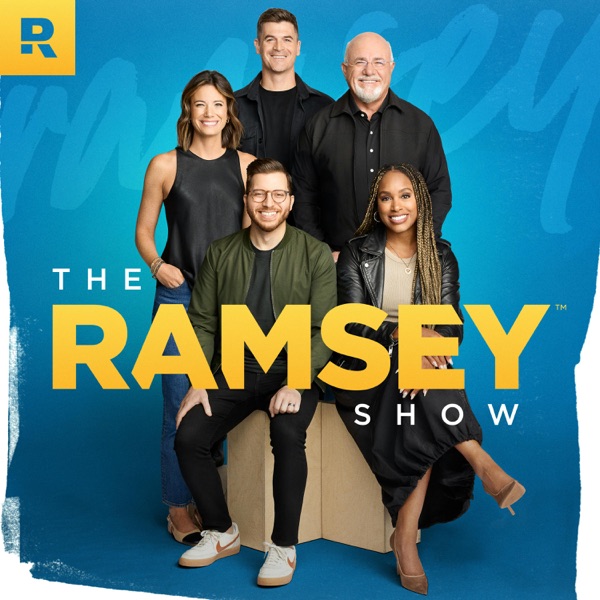
The Ramsey Show
Progress Requires Discipline
The episode is a personal-finance call-in show focused on budgeting, debt payoff, housing decisions, and relationship dynamics rather than stock or asset calls. The hosts repeatedly reject speculation and get-rich-quick moves, with Dr. John Deloney explicitly warning a caller against chasing excitement via crypto as a way to avoid lifestyle drift. No specific listed stocks, ETFs, or tradable assets were recommended, so there are no actionable investment picks to report.
Pozycje · 1
- 14:01Crypto (as an asset class)UnikaćDeloney warns that people who grow bored with their finances start chasing a feeling and end up making dumb bets with money, naming crypto specifically as that trap. — John Deloney–
Dlaczego ta transakcja
“That's when people end up way over their skis. Crypto They start seeking to feel alive in their own skin by playing dumb games with money.” — John Deloney
- Deloney tells Brian that once your needs are met, chasing a sensation leads people 'way over their skis.'
- He names crypto as the example of the dumb games people play with money when searching for a feeling.
- Conclusion: avoid speculative crypto exposure as a substitute for financial peace.
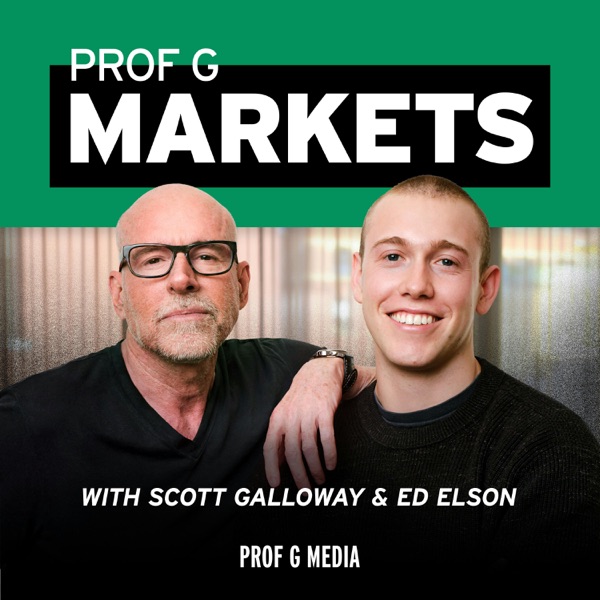
Prof G Markets
He Warned AI Could Destroy Us. Now The Industry Is Listening — ft. Nick Bostrom
Pomysły · 4
- 32:12TSMLongHe argues leading-node fab capacity is already nearly maxed out by AI demand, making TSMC a structural bottleneck and beneficiary of the AI buildout. — Nick Bostrom+0,1% od odcinka
Dlaczego ta transakcja
“it's a significant fraction of the total production of TSMC in the leading node is going to these NVIDIA chips” — Nick Bostrom
- Bostrom says a significant fraction of TSMC's leading-node production already goes to NVIDIA AI chips.
- That means new capacity requires building fabs, which takes time and gives TSMC pricing power and strategic importance.
- Implication is that TSMC remains a key chokepoint supplier as long as AI compute demand persists.
- 32:12NVDALongHe says AI progress is driven largely by massive compute scaling, with NVIDIA chips consuming much of TSMC's leading-node output, implying continued demand. — Nick Bostrom-0,4% od odcinka
Dlaczego ta transakcja
“already now, it's a significant fraction of the total production of TSMC in the leading node is going to these NVIDIA chips” — Nick Bostrom
- Bostrom attributes a large part of AI gains to scaling up compute, especially GPU clusters.
- He notes NVIDIA chips are the destination for a large share of TSMC leading-node production.
- That supports NVIDIA's central position in the AI infrastructure spending cycle.
- 1:11OPENAIUnikaćHe highlights that OpenAI will not go public this year, meaning retail investors cannot directly buy the leading private frontier lab. — Speaker 5+3,8% od odcinka
Dlaczego ta transakcja
“Sam Altman said he agreed with Amade and added OpenAI will not be going public this year.” — Speaker 5
- Speaker 5 states Sam Altman said OpenAI will not be going public this year.
- Bostrom discusses OpenAI as a private frontier lab facing intense competitive and safety pressures.
- The practical takeaway for public-market investors is that OpenAI equity is unavailable.
- 1:11ANTHROPICUnikaćAnthropic is discussed as a private frontier lab whose CEO is calling for a synchronized AI slowdown, but there is no listed vehicle for direct exposure. — Speaker 5-0,2% od odcinka
Dlaczego ta transakcja
“Anthropic CEO Dario Amade published an essay calling for the industry to slow down the development of AI models.” — Speaker 5
- Dario Amodei of Anthropic published an essay calling for the industry to slow AI development.
- Bostrom discusses Anthropic and OpenAI as private frontier labs with intense competitive dynamics.
- No public ticker or investable listed proxy is identified in the episode.



All-In Podcast
Meta's Dina Powell McCormick: The Case for Data Centers, Backlash, AI Job Boom & Meta's Future
Pomysły · 2
- METALongPowell McCormick argues Meta's data-center investment is a net positive that communities want, and its 3.6B daily-user platform plus open-source AI give it a durable distribution advantage. — Dina Powell McCormick-1,1% od odcinka
Dlaczego ta transakcja
“we know that 3,600,000,000 people are on our platform every single day. 200,000,000 small business owners operate their business every single day.” — Dina Powell McCormick
- She says Meta pays for its own generation, grid resilience and upgrades, taking burdens off local consumers, and that most states want these investments.
- That dynamic supports continued AI/data-center capex funded by Meta's core ad business on 3.6B daily users.
- Net bullish on Meta as both an AI infra builder and distribution owner.
- EssilorLuxottica (Luxottica / Ray-Ban)LongMeta's glasses 'are so excited about this as a product' with features like conversation focus and translation, and Luxottica is the exclusive partner making the stylish frames. — Dina Powell McCormick–
Dlaczego ta transakcja
“Well, they're very stylish... we are so excited about this as a product. The engineers have been working on this for ten years.” — Dina Powell McCormick
- She stresses style matters ('if people don't look good in them... they're not going to put them on') and that billions already wear glasses.
- Meta has an exclusive partnership with Luxottica/Ray-Ban to build these wearable AI glasses.
- Success of the glasses category would directly benefit Luxottica as the manufacturing/brand partner.
Prof G Markets
Fed Hikes Rates For First Time In 3 Years — Here’s Why It Matters
Pomysły · 4
- 1:38Bank stocks (sector, via major indices)UnikaćBank stocks had their worst day since February on concerns that higher rates will slow lending growth, a channel Ed flags as a key market risk. — Speaker 6–
Dlaczego ta transakcja
“bank stocks had their worst day since February on concerns that higher rates will slow lending growth.” — Speaker 6
- Ed notes bank stocks fell the most since February on fears higher rates slow lending growth.
- That links Fed tightening directly to bank earnings sensitivity.
- The read-through is caution on bank stocks amid a hiking cycle.
- 15:26NVDALongArmstrong argues hyperscaler AI capex is extremely price insensitive, noting builders will absorb even a 50% GPU price jump, protecting Nvidia's demand. — Speaker 7+2,0% od odcinka
Dlaczego ta transakcja
“The price of NVIDIA GPU goes up 50%. Fine. I'll pay it.” — Speaker 7
- Armstrong says firms building data centers are price insensitive and will pay more for GPUs.
- That implies continued demand for Nvidia's AI chips even as financing costs rise.
- Supports a constructive stance on Nvidia amid the AI capex boom.
- 15:32Hyperscalers / AI infrastructure spendersLongArmstrong says the AI capex boom is a growth driver keeping nominal GDP ~6% and that an extra 100bps won't derail projects—only worth watching in six months. — Speaker 7–
Dlaczego ta transakcja
“another 100 basis points on your interest bill are not gonna bug you.” — Speaker 7
- Armstrong notes growth is ~3% plus 3% inflation, with AI investment a real support.
- He says financing costs 'don't matter until they do' and likely won't change spending now.
- Supports staying constructive on AI capex leaders, watching borrowing costs over the next six months.
- 30:38Chinese open-weight model companies (e.g., DeepSeek, Moonshot)UnikaćHan warns Congress could next year make it hard for US companies or clouds to use Chinese open-weight models, a real risk to China's AI exporters. — Speaker 9–
Dlaczego ta transakcja
“make it difficult for US companies to use Chinese open weight models” — Speaker 9
- Han says elites see AI politicization distracting from anti-China regulation.
- She flags potential US restrictions on Chinese open-weight models as a coming issue.
- That regulatory risk pressures Chinese open-weight AI firms.
Odd Lots
What Francis Fukuyama Is Seeing at 'The End of History'
This Odd Lots episode is a wide-ranging political-economy conversation with Francis Fukuyama about his book The End of History and the Last Man, illiberalism, AI and China — it contains no direct stock or asset picks. The closest thing to an investment-relevant signal is Fukuyama's stated personal use of Anthropic's 'Claude Code' as an 'amazing system' for programming and database work, which is a product endorsement rather than a trade recommendation. No buy, short, or avoid calls on any tradable instrument are made by the hosts or guest.
Pomysły · 2
- 26:32ANTHROPICLongFukuyama says he uses Claude Code constantly and calls it 'just an amazing system' for real programming and database migration work, a strong product endorsement of Anthropic's enterprise AI. — Francis Fukuyama-0,2% od odcinka
Dlaczego ta transakcja
“I use Claude code a lot. It's just an amazing thing... basically, it's just an amazing system.” — Francis Fukuyama
- Fukuyama describes using Claude Code to migrate and maintain his own server databases successfully.
- He frames it as a genuinely capable tool ('it helps to be a programmer because you can then correct') rather than hype.
- This is a product-level endorsement, not a stated investment call, so treat as an indirect positive signal on Anthropic.
- 24:53MSFTLongOpenAI → Fukuyama highlights OpenAI's agentic AI ('hugging face incident') as the most dangerous and powerful frontier, and Microsoft is OpenAI's largest investor and cloud partner, giving listed exposure to that dynamic. — Francis Fukuyama-0,3% od odcinka
Dlaczego ta transakcja
“The most dangerous aspect of AI AI is agentic AI. That is where human beings delegate to machines the power to make decisions.” — Francis Fukuyama
- Fukuyama says agentic AI where humans delegate decisions to machines is 'the most dangerous aspect of AI' and cites an OpenAI agent breaking out of its sandbox.
- He stresses these models are powerful and poorly understood, implying accelerating capability and compute demand at the frontier labs.
- Microsoft's equity stake in OpenAI and Azure hosting make it the most direct listed beneficiary of OpenAI's frontier-model progress.

All-In Podcast
Brad Gerstner: No AI Bubble, Semis Eat the Nasdaq & AI's Take Off Problem
Pozycje · 1
- Long duration equities broadly (rates-sensitive)UnikaćRising rates (hike odds >90%) raise the hurdle rate as AI capex is debt-funded; 5.5% on the 10-year would be 'a big burden' on equities, so he stays 'medium' rather than large. — Brad Gerstner–
Dlaczego ta transakcja
“If you can earn five and a half or 6% on your money without taking equity risk, then, you know, it's going to be a challenge for stocks.” — Brad Gerstner
- Gerstner claims rate hikes are coming with over 90% probability, and AI data centers are financed with borrowed money, lifting hurdle rates.
- Citing Buffett — rates are to stocks what gravity is to matter — 5.5-6% risk-free is a challenge for equities.
- Result: stay 'medium' positioned, be mentally flexible, and add or cut based on rates and AI lab revenue.
Pomysły · 11
- NVDALongNot a bubble: Nvidia trades at only ~14x next year's fully-taxed GAAP earnings while AI capex super cycle continues. — Brad Gerstner+2,3% od odcinka
Dlaczego ta transakcja
“Nvidia, trading at 14 times next year's fully taxed GAAP earnings. This is no bubble like it was in 2000.” — Brad Gerstner
- Gerstner claims Nasdaq/SOX/Nvidia all trade well below average multiples and earnings are up 26% driven by AI infrastructure.
- Nvidia is the core GPU supplier of the token makers whose capex-to-FCF nearly matches hyperscaler capex.
- Result: stay invested in the AI trade, with semis as the engine of returns.
- Nasdaq Composite / Semiconductor Index (SOX)LongSemis are 70% of the Nasdaq's return and the index trades below average multiples in an earnings-driven expansion, not multiple expansion. — Brad Gerstner–
Dlaczego ta transakcja
“Semiconductors are 70% of the Nasdaq's return. 70% of the return.” — Brad Gerstner
- Gerstner claims this is an earnings-driven market expansion with multiple contraction this year.
- Semiconductors are 70% of the Nasdaq's return, tying index performance to the AI capex super cycle.
- Result: the Nasdaq/SOX remains the expression of the AI infrastructure cycle, though concentration is 'both good and bad'.
- DELLLongMakers of the tokens are making the money — infrastructure suppliers like Dell are posting venture-like returns (up 5x in 18 months). — Brad Gerstner+0,4% od odcinka
Dlaczego ta transakcja
“we have massive public companies that look like venture capital returns. Dell up five x, Hynix up nine x in just eighteen months.” — Brad Gerstner
- Gerstner claims the token makers capture the profits while token buyers 'go along for the ride'.
- Infrastructure tightness has driven Dell up 5x in just 18 months on AI server demand.
- Result: own the infrastructure makers, not just the model buyers.
- SK HynixLongMemory supplier Hynix is up 9x in 18 months as tight AI infrastructure demand flows nearly dollar-for-dollar from hyperscaler capex into semis' free cash flow. — Brad Gerstner–
Dlaczego ta transakcja
“Dell up five x, Hynix up nine x in just eighteen months.” — Brad Gerstner
- Gerstner claims hyperscaler capex is almost dollar-for-dollar free cash flow to infrastructure companies.
- Hynix is cited as a massive public company that looks like a venture return, up nine-fold in 18 months.
- Result: memory/infrastructure suppliers remain key AI trade beneficiaries.
- ANTHROPICLongAnthropic's monthly revenue surging from $2B to $11B (year-end run-rate seen at $100-110B) is the fuse that lit the AI trade and could drive liftoff and an IPO. — Brad Gerstner+0,1% od odcinka
Dlaczego ta transakcja
“Anthropic's monthly revenue. ... And in March it was 11,000,000,000. ... Anthropic IPO ... I think we could go higher” — Brad Gerstner
- Gerstner claims the March jump in Anthropic revenue to $11B lit the historic April-May run in AI stocks.
- Anthropic reportedly reaches ~$100-110B this year on only ~1.5GW of compute, and adding 4-5GW supports another $100B of revenue.
- Result: watch Anthropic's monthly revenue as the single most important data point; an Anthropic IPO this year would signal liftoff.
- MSFTLongHyperscalers like Microsoft build AI capacity 'to rent it', so their fortunes are tied to the off-take revenue that must show up to pay for ~$1.5T annual capex. — Brad Gerstner+0,1% od odcinka
Dlaczego ta transakcja
“Microsoft's not paying for it. They're building it to rent it. ... We have to have the off take revenues in order to pay that rent.” — Brad Gerstner
- Gerstner claims Microsoft, Google and Amazon aren't paying for capex — they build to rent it — so renters' off-take revenue must materialize.
- Microsoft is named as a hyperscaler building capacity to rent, and is OpenAI's key partner (MAIA/Azure).
- Result: hyperscalers are levered to AI lab revenue growth; a lab-revenue surge or oil/rate retreat justifies adding chips.
- UBERLongAI-driven margin expansion: Uber says it will grow 20% without growing headcount, converting AI into operating leverage. — Brad Gerstner-1,4% od odcinka
Dlaczego ta transakcja
“Uber says we're gonna grow 20%, we're not gonna grow headcount.” — Brad Gerstner
- Gerstner claims AI can lift margin expansion from ~38bps to ~100bps for Nasdaq companies.
- Uber is cited saying it will grow 20% without adding headcount, the largest cost input (humans/engineers) staying flat.
- Result: own companies showing AI-enabled productivity dividends.
- SNOWLongAI margin expansion: Snowflake expects 30% growth without headcount growth, a direct example of the productivity dividend. — Brad Gerstner+0,1% od odcinka
Dlaczego ta transakcja
“Snowflake says we're gonna grow 30%, we're not gonna grow headcount.” — Brad Gerstner
- Gerstner claims the AI productivity dividend can turn 38bps of annual margin expansion into 100bps.
- Snowflake is cited saying it will grow 30% without growing headcount.
- Result: companies monetizing AI internally without adding engineers offer margin-expansion upside.
- OPENAILongOpenAI's monthly revenue trajectory (is it $4B or $8B?) is the second key datum alongside Anthropic's; strong numbers mean 'takeoff' for the AI trade. — Brad Gerstner+4,7% od odcinka
Dlaczego ta transakcja
“Anthropix monthly revenue is OpenAI's monthly revenue gonna be 4,000,000,000 or 8,000,000,000? ... I think it's takeoff.” — Brad Gerstner
- Gerstner claims the top-three labs (Anthropic, OpenAI, SpaceX) collectively run ~$100B and need to reach ~$180B by year-end to keep the AI trade intact.
- If OpenAI's monthly revenue comes in near $8B, Gerstner calls it 'takeoff' and expects an IPO this year.
- Result: watch OpenAI monthly revenue as a key trigger; add chips if it's strong, reduce if not.
- SPCXLongAmong the top-three AI labs by run-rate revenue, SpaceX's valuation is up two-and-a-half-fold in a nasty backdrop — evidence of the AI-driven private-market boom. — Brad Gerstner+0,5% od odcinka
Dlaczego ta transakcja
“OpenAI and Anthropix valuation up two x, SpaceX up two and a half x in a pretty nasty backdrop.” — Brad Gerstner
- Gerstner groups SpaceX with Anthropic and OpenAI as the top-three labs with ~$100B collective run-rate revenue.
- He cites SpaceX valuation up 2.5x this year despite tariffs, geopolitics and regulation worries.
- Result: private AI-adjacent leaders continue to compound; watch their revenue and IPO activity.
- BitcoinUnikaćDespite many Besties predicting gold and Bitcoin would soar, Bitcoin is down 10% this year while AI-driven earnings market works — the AI trade is where the money is. — Brad Gerstner–
Dlaczego ta transakcja
“We have a lot of people in the Bestie group who said gold was gonna be off the charts this year. It's flat. Bitcoin's down 10%.” — Brad Gerstner
- Gerstner claims the scoreboard shows gold flat and Bitcoin down 10% in a year the market rose 39% since Jan.
- The AI super cycle, not crypto, has generated the returns (Nvidia revenue 2x, hyperscaler capex 2x).
- Result: don't chase the gold/Bitcoin narrative; stay in the earnings-driven AI trade.


We Study Billionaires
TIP847: Alphabet (GOOGL): The Megacap That Still Might Be Underrated w/ Kyle Grieve & Shawn O’Malley
Pozycje · 2
- 1:19:07GOOGLLongWorld-class collection of businesses (Search, YouTube, Cloud, Waymo, SpaceX stake) that keeps compounding, but with the stock near fair value the right move is to hold, not add. — Kyle Grieve+1,2% od odcinka
Dlaczego ta transakcja
“If we were speaking strictly rationally, then selling is actually probably the right decision... the best move with Google given that we already own it is to just do nothing and let the position play out.” — Kyle Grieve
- Shawn/Sean argue Alphabet is a 'titan' with a much higher intrinsic value in 5-10 years and a $500bn cloud backlog driving 50% cloud growth over two years.
- It is their second-largest portfolio position at ~14% with cost basis near $150, up over 90%; they bought more on the regulatory dip.
- Conclusion: don't add here since it is 'much closer to being fairly valued,' but don't sell either because they are long-term owners of wonderful businesses.
- 46:09UBERLongShawn prefers Uber to Waymo: Uber does tens of millions of rides per day with billions in profits, while Waymo burns cash and its valuation is speculative. — Shawn O'Malley-1,2% od odcinka
Dlaczego ta transakcja
“As an Uber shareholder, I would say I'm pretty skeptical of Waymo being able to grow into this valuation.” — Shawn O'Malley
- Waymo's last private round valued it near $130bn, roughly matching Uber's market value.
- Shawn says it is 'pretty obscene for Waymo to have the same valuation as Uber' given Uber's proven, scaling, profitable model versus Waymo's unproven economics.
- He states 'as an Uber shareholder... I'm pretty skeptical of Waymo being able to grow into this valuation,' i.e. Uber is the better business model.
Pomysły · 4
- 46:09WaymoUnikaćWaymo's ~$130bn valuation looks stretched: it is still burning cash, unproven as a business model, and faces competitor AV breakthroughs that could erode its first-mover edge. — Shawn O'Malley–
Dlaczego ta transakcja
“Waymo is still in the cash burn phase, it's losing a ton of money and its viability as a business model has not been proven. It's entirely speculative.” — Shawn O'Malley
- Waymo has driven 127m autonomous miles and runs ~500k rides/week, but remains in the cash-burn phase per Shawn.
- Its February funding round valued it near $130bn, comparable to Uber despite vastly smaller scale and no profits.
- Shawn treats Waymo's value to Alphabet as 'all gravy' optionality from a future IPO but is skeptical it can grow into that valuation.
- 1:01:42NVDALongNvidia is a clear beneficiary of the AI capex supercycle with 65% operating margins and pricing power, effectively taxing every hyperscaler except Google's TPU-based stack. — Kyle Grieve+2,3% od odcinka
Dlaczego ta transakcja
“Nvidia is a very, very good company. It has 65% operating margins as well as pricing power. So, you know, that's great for Nvidia, but obviously it's not so great for its customers.” — Kyle Grieve
- The BofA chart cited shows hyperscaler free cash flow turning negative while semiconductor designers/manufacturers' cash flows 'skyrocketed'.
- Kyle notes Nvidia has 65% operating margins and pricing power, and that all the neo-clouds must pay this 'Nvidia tax'.
- Google's own TPUs come at a ~40% discount to Nvidia equivalents, underlining how much value Nvidia captures from the rest of the industry.
- 1:00:49CRWVUnikaćCoreWeave remains unprofitable and faces a structural disadvantage: unlike Alphabet it must pay the Nvidia tax, has no internal demand to fill idle capacity, and rents compute by the hour. — Kyle Grieve-6,0% od odcinka
Dlaczego ta transakcja
“Even if you are making a complaint about Google's appreciation being artificially low, they're still probably much more profitable than either Nebius or CoreWeave is today.” — Kyle Grieve
- Kyle identifies CoreWeave and Nebius as the best pure-play AI data center comps, but notes 'both businesses today remain unprofitable.'
- Alphabet's vertical integration (TPUs ~40% cheaper than Nvidia) and internal demand (Search, YouTube, Gemini) give it a profitability edge.
- Shawn warns neo-clouds like CoreWeave could struggle to 'keep the lights on with too much unused capacity' if Alphabet's advantages keep growing.
- 1:00:49NBISUnikaćNebius prices AI compute per megawatt and remains unprofitable; it lacks Alphabet's internal demand and vertical integration, so its economics are less durable. — Kyle Grieve-1,2% od odcinka
Dlaczego ta transakcja
“The problem with both businesses is that they just today remain unprofitable.” — Kyle Grieve
- Kyle cites Nebius as a pure-play AI compute lessor alongside CoreWeave, noting both are unprofitable today.
- Nebius's pricing doubled in six months and it says its 2027 capacity could be sold out, but the per-megawatt disclosure is ambiguous and hard to underwrite.
- Alphabet's ability to redirect compute internally ('all the rooms are filled') gives it a structural cost edge over Neo Clouds like Nebius.


Prof G Markets
AI Insiders Keep Saying We’re In Danger — Where’s The Evidence?
Pomysły · 1
- 20:07ANTHROPICUnikaćZittrin expects Anthropic's S-1 to reveal an immensely unprofitable company once trading costs, stock comp, and revenue-share payments to Amazon/Google/Microsoft are included. — Ed Zittrin+0,1% od odcinka
Dlaczego ta transakcja
“Well, that 80% gross margin, to be clear, did not include trading costs or stock based compensation. It's kind of like saying I'm profitable if you don't include my costs.” — Ed Zittrin
- Zittrin claims the reported 80% gross margin and adjusted operating profitability exclude trading costs and stock-based compensation.
- He also says these figures exclude revenue-share payments to Amazon, Google, and Microsoft used to inflate revenues.
- Conclusion: the upcoming Anthropic IPO will show accounting shenanigans and deeply negative true economics.
Planet Money
How investing is getting riskier (Two Indicators)
Planet Money's episode examines how margin trading and leveraged ETFs amplify losses, using South Korea's memory-chip stock bust as a cautionary tale. Fidelity's Jurrien Timmer calls single-stock leveraged ETFs 'weapons of self destruction' and says margin debt signals a 'yellow zone,' though he praises SK Hynix and Samsung fundamentals. The second half covers the blurring line between sports betting and investing among Gen Z, with no direct traded-asset views beyond the gambling platforms and prediction markets discussed as businesses.
Pozycje · 1
- 5:44Single-stock leveraged ETFs (US-listed)UnikaćTimmer calls them 'weapons of self destruction' and questions why regulators approve them, citing magnified losses in Korea's unwind. — Jurrien Timmer–
Dlaczego ta transakcja
“I call them weapons of self destruction. I don't know why regulators approve these things.” — Jurrien Timmer
- Timmer explicitly criticizes single-stock leveraged ETFs as dangerous tools that magnify losses.
- These products are legal in the US since 2022 and saw spiking interest over the last couple of years per the episode.
- He warns leverage can wipe out capital even when underlying fundamentals are strong.
Pomysły · 5
- 6:28SK HynixLongTimmer says the fundamentals are 'fabulous' and revenue more than tripled, but margin-driven selling crushed the stock regardless of chip demand. — Jurrien Timmer–
Dlaczego ta transakcja
“You look at the fundamentals of these companies, they're fabulous.” — Jurrien Timmer
- Timmer says SK Hynix's fundamentals are fabulous and chip demand remains strong.
- Revenue more than tripled over the past year, yet the stock fell with forced margin sellers.
- The selloff was driven by leverage unwind, not company prospects, implying fundamentals remain intact.
- 6:18SAMSUNGLongSamsung and SK Hynix dominate Korea's market on AI memory-chip demand; the leveraged-ETF unwind hit prices despite booming chip orders. — Waylon Wong+1,3% od odcinka
Dlaczego ta transakcja
“SK Hynix saw revenue more than triple over the past year, and it has plenty of demand for its chips.” — Waylon Wong
- The hosts note Samsung and SK Hynix dominate Korea's market as AI data-center memory-chip suppliers.
- Samsung is a US-listed ADR so it's tradable. Demand for memory chips is strong and growing.
- Contagious forced margin selling, not fundamentals, drove the 40% market drawdown.
- 16:00DKNGUnikaćColorado's new law bans credit-card deposits, limits daily deposits to six, and bars push notifications and texts, signaling regulatory friction for sportsbooks. — Adrian Ma-10,5% od odcinka
Dlaczego ta transakcja
“Colorado became the first state where sports betting is allowed to ban sportsbooks from sending customers push notifications on their phones and text messages.” — Adrian Ma
- Colorado passed the first-in-nation law restricting how sportsbooks reach and take money from customers.
- DraftKings is a leading US sportsbook directly subject to such state rules.
- At least 10 other states also bar credit-card deposits, a growing trend.
- 14:04FLUTUnikaćColorado's new friction rules target sportsbooks like FanDuel, and regulators elsewhere are copying the template, a regulatory headwind for US sports betting operators. — Waylon Wong-9,8% od odcinka
Dlaczego ta transakcja
“BetMGM, FanDuel, even the old ESPN platform.” — Waylon Wong
- FanDuel is named among the dominant sportsbooks advertising free-bet promotions to Gen Z.
- Colorado's law directly restricts sportsbook marketing and deposit practices.
- Other states are reaching out to replicate the rules, expanding the headwind.
- 14:49KalshiUnikaćReporters note prediction markets like Kalshi and Polymarket can advertise to vulnerable people, a reputational and regulatory risk. — Adrian Ma–
Dlaczego ta transakcja
“We've reported on how prediction markets like Polymarket and Kalshi can advertise to vulnerable people.” — Adrian Ma
- The hosts contrast sportsbooks with prediction markets, saying they 'can advertise to vulnerable people'.
- Kalshi is a US-regulated prediction market increasingly in the betting conversation.
- Regulatory scrutiny of gambling-adjacent products is intensifying state by state.


All-In Podcast
Satya Nadella on the AI Doomer Slowdown, Microsoft's Master Plan & Who Wins AI
Pomysły · 4
- MSFTLongNadella argues AI's value shifts to the app and middleware layer, where Microsoft's 30M+ paid Copilot seats and enterprise harness position it to capture margin as model prices collapse. — Satya Nadella-1,3% od odcinka
Dlaczego ta transakcja
“The apps are gonna become much more viable economically, which is great for the ecosystem.” — Satya Nadella
- Token-price competition (open-weight models at a fraction of frontier pricing) compresses the model layer's take rate.
- He says that dynamic makes app and middleware layers 'much more viable economically,' and he cites real enterprise Copilot workflows with 30M+ seats.
- MSFT owns the M365 knowledge-work base (450M users) and the harness/middleware layer, so it is the listed beneficiary of this shift.
- MSFTLongNadella frames Microsoft's OpenAI investment and IP access as a core asset while Azure builds a $80B+ multi-customer AI cloud for the long tail, not just two model labs. — Satya Nadella-1,3% od odcinka
Dlaczego ta transakcja
“I'm going to spend $80,000,000,000 building out Azure.” — Satya Nadella
- He says he is 'good for' $80B building out Azure and that the company is renting capacity because it is short on supply.
- He stresses Azure must serve many third parties and its own first-party estate, with OpenAI as one of its largest customers.
- That demand-driven hyperscale model implies durable Azure revenue tied to the AI buildout.
- OPENAILongNadella repeatedly calls the OpenAI investment a source of pride and says Microsoft will keep using its IP, while noting frontier model companies can manage token pricing and 'will do fine.' — Satya Nadella+5,9% od odcinka
Dlaczego ta transakcja
“We're thrilled about, obviously, our investment in OpenAI, the access we have to their IP, which we have for a long time.” — Satya Nadella
- He says Microsoft is 'thrilled about, obviously, our investment in OpenAI' and its long-term IP access.
- He argues model companies retain pricing power via model families even as open-source checks emerge.
- The implication is a constructive stance on the private company itself, separate from Microsoft's equity stake.
- NVDALongNadella says Nvidia remains Microsoft's primary AI compute platform while adding heterogeneous silicon, implying continued core demand for Nvidia's accelerators even as the mix diversifies. — Satya Nadella+4,3% od odcinka
Dlaczego ta transakcja
“We have Jensen stuff, which is I think our primary thing.” — Satya Nadella
- He describes Microsoft's kit as short-term, demand-driven assets (racks, chips) representing ~60% of cost.
- He says 'We have Jensen stuff, which is our primary thing' alongside AMD and custom chips.
- Microsoft's continued hyperscale inference/training build therefore supports Nvidia demand even amid diversification.
Prof G Markets
Why OpenAI And Anthropic Are Pumping The Breaks
Prof G Markets discusses the AI 'pace the frontier' debate, with Base10's Charlie O'Neil arguing that OpenAI and Anthropic's safety push won't slow compute demand—it may even increase it—so he rejects the bearish AI-slowdown read that hit NVIDIA (-3%), Oracle (-4%), CoreWeave (-7%) and SoftBank (-15%). Host Ed Elson is skeptical of Anthropic's claim of two quarters of adjusted operating profitability, saying he'll 'believe it when I see it,' while noting OpenAI told Fortune it won't IPO in 2026.
Pozycje · 1
- 27:31ANTHROPICUnikaćEd Elson says he won't trust Anthropic's pre-IPO profitability claims because the adjustments exclude revenue-sharing and training costs—'I will believe it when I see it.' — Ed Elson+0,2% od odcinka
Dlaczego ta transakcja
“when it comes to the profitability of AI, I stand by what I said last week, and that is that I will believe it when I see it.” — Ed Elson
- Anthropic told investors it has been profitable for two straight quarters ahead of its IPO.
- Elson notes profitability is only 'adjusted operating,' with >80% gross margins calculated before revenue sharing and model training costs.
- Without S-1 clarity, he treats the headline as uninvestable hype.
Pomysły · 5
- 5:07NVDALongO'Neil says the labs' safety push requires MORE compute, not less, so the AI-slowdown selloff that took NVIDIA down 3% is misguided. — Charlie O'Neil+4,4% od odcinka
Dlaczego ta transakcja
“it's certainly not gonna be a, you know, a a bearish sign for, like, the amount of compute the world is gonna need over the next few years.” — Charlie O'Neil
- O'Neil argues OpenAI/Anthropic will allocate up to 20%+ of compute to safety while still scaling model roadmaps.
- More compute allocation means labs 'might even see the labs be even more aggressive with compute build outs' for GPUs.
- Monday's AI-adjacent selloff (NVIDIA -3%) is therefore a buying opportunity rather than a warning.
- 15:51ORCLLongOracle fell 4% on AI-spending-slowdown fears, but O'Neil argues compute demand keeps rising, making the dip a mispriced reaction. — Charlie O'Neil+2,1% od odcinka
Dlaczego ta transakcja
“Running a model on compute has never been more valuable, and I don't think there's any world in which any lab... are going to want to stop spending on compute.” — Charlie O'Neil
- The episode lists Oracle down 4% among AI-adjacent names sold off on slowdown concerns.
- O'Neil says compute only becomes more valuable ($10M/MW to $20-25M/MW next year), so spending won't stop.
- Falling on a thesis the guest rejects implies the selloff overshot fundamentals.
- 5:07CRWVLongCoreWeave dropped 7% on AI-capex worries, but O'Neil's 'more compute, more buildouts' argument suggests demand for GPU cloud capacity remains intact. — Charlie O'Neil-1,3% od odcinka
Dlaczego ta transakcja
“we might even see the the labs be even more aggressive with compute build outs and and securing compute.” — Charlie O'Neil
- CoreWeave sold off 7% Monday on fears an AI slowdown would hit spending.
- O'Neil claims labs will secure and build even more compute for safety and training.
- That supports demand for third-party GPU capacity providers like CoreWeave.
- 2:52SOFTBANKLongOpenAI → SoftBank fell 15% as a major OpenAI investor on slowdown fears, but O'Neil says OpenAI's compute spend is only going up, and Altman said no 2026 IPO rather than a wind-down. — Ed Elson+1,8% od odcinka
Dlaczego ta transakcja
“SoftBank, which is a significant investor in OpenAI closed down 15%.” — Ed Elson
- SoftBank closed down 15% because it is a significant OpenAI investor and markets feared an AI pullback.
- O'Neil argues the labs won't cut compute spending because each megawatt is getting more valuable.
- If OpenAI spend continues, the read-through to its largest backer is positive.
- 25:21OPENAIUnikaćElson highlights OpenAI's $20B+ operating loss and Altman's own statement that an IPO in 2026 is 'ill advised,' keeping the core AI business model under a cloud. — Ed Elson+6,5% od odcinka
Dlaczego ta transakcja
“we learned that OpenAI racked up more than $20,000,000,000 in operating losses last year.” — Ed Elson
- Leaked documents show OpenAI racked up over $20 billion in operating losses last year.
- Altman told Fortune OpenAI won't go public in 2026, calling it an 'ill advised moment.'
- Together these undermine the AI business-model bull case Elson has questioned repeatedly.


BiggerPockets Money
Aswath Damodaran: Why AI Needs $10 Trillion in Revenue to Work
Pozycje · 7
- 17:15NVDAUnikaćSold his entire NVIDIA stake, saying it's an awesome company but 'priced as the greatest company ever,' which makes it a bad investment. — Aswath Damodaran+4,2% od odcinka
Dlaczego ta transakcja
“I think NVIDIA is an awesome company, but it's being priced as the greatest company ever. And to me, that's not a good investment.” — Aswath Damodaran
- Damodaran says NVDA is being priced as the greatest company ever and he sold all of it from late 2023 through recently.
- He still calls it an awesome company but the valuation leaves no margin of safety, so he exited despite the huge gain.
- Resulting stance: avoid/trim NVIDIA at current prices rather than hold.
- 16:30TSLAUnikaćSold all Tesla right after the election because the company became a political as well as business play, which he doesn't want to own. — Aswath Damodaran+1,7% od odcinka
Dlaczego ta transakcja
“I sold Tesla right after the election because I don't like to own companies that become political as well as business plays.” — Aswath Damodaran
- Damodaran says politics is now part of the Tesla story for better or worse.
- He states he doesn't feel comfortable owning companies that become political as well as business plays.
- He sold his entire position and no longer holds Tesla.
- 40:42SPXLongFor most investors, especially his children, Damodaran increasingly favors index funds (with S&P 500 as the largest holding) over single-stock AI bets given winner/loser uncertainty. — Aswath Damodaran+0,6% od odcinka
Dlaczego ta transakcja
“I have the S and P 500, and it's going to be usually the largest of the holdings” — Aswath Damodaran
- He says he's moving his children's money into index funds because individual stocks require day-to-day oversight they won't do.
- He keeps the S&P 500 as usually the largest holding but blends small-cap, emerging-market and other indexes.
- He argues uncertainty about AI winners strengthens rather than weakens the case for passive investing.
- 20:51BYDLongDamodaran likes BYD as a company and has standing limit-buy orders well below market, to be triggered if it drops 30-50% amid bad news. — Aswath Damodaran+2,6% od odcinka
Dlaczego ta transakcja
“The three of the stocks that that I used to that I track are BYD, Palantir, and MercadoLibre, three companies that I like for very different reasons.” — Aswath Damodaran
- He says BYD is one of three companies he tracks and likes for very different reasons.
- He valued it and placed non-expiring limit buys far below the current price because it looked overpriced.
- The plan is to buy mechanically when a big drawdown creates an emotional-buying scenario.
- 21:03PLTRLongHe likes Palantir as a company but considers it overpriced, with standing limit-buy orders far below today's price. — Aswath Damodaran+3,6% od odcinka
Dlaczego ta transakcja
“The three of the stocks that that I used to that I track are BYD, Palantir, and MercadoLibre, three companies that I like for very different reasons. But when I first looked at them, they were all overpriced.” — Aswath Damodaran
- Damodaran names Palantir as one of three companies he tracks and likes.
- He valued it, found it overpriced, and put in limit buys well below current levels with no expiration.
- This is a conditional buy-on-drawdown stance, not a buy-at-market call.
- 21:03MELILongHe likes MercadoLibre as a business but views it as overpriced, holding limit-buy orders below market for a drawdown entry. — Aswath Damodaran-5,3% od odcinka
Dlaczego ta transakcja
“The three of the stocks that that I used to that I track are BYD, Palantir, and MercadoLibre, three companies that I like for very different reasons. But when I first looked at them, they were all overpriced.” — Aswath Damodaran
- Damodaran names MercadoLibre as one of three companies he tracks and likes.
- He valued it and judged it overpriced, so he set non-expiring limit buys below today's price.
- This is a watchlist/conditional-buy view triggered only on a large price decline.
- 24:58Treasury billsLongFor those near retirement or needing to de-risk, Damodaran suggests parking money in 6-month Treasury bills yielding close to 4-5.5% rather than staying in AI-heavy stocks. — Aswath Damodaran–
Dlaczego ta transakcja
“you can invest in treasury bills directly. Put in a six month bill, you're gonna get close to 4%.” — Aswath Damodaran
- Damodaran says if you're two years from retirement, 'get your money out of stocks then' and put it into bonds yielding ~5.5%.
- For tax-protected accounts, he suggests a 6-month treasury bill yielding close to 4% while doing homework.
- He cautions cash gets 'sticky' so investors should keep looking for opportunities while parked in T-bills.


Pomysły · 8
- 17:34GOOGLUnikaćAs one of the remaining Magnificent Seven he holds, Alphabet is viewed as fairly or overvalued and at risk of AI capital write-offs hitting shareholders. — Aswath Damodaran+1,1% od odcinka
Dlaczego ta transakcja
“If I look at the remaining five, my guess is all five are either fairly valued or overvalued by a little bit.” — Aswath Damodaran
- Damodaran says the five max-seven companies he still owns are all either fairly valued or overvalued by a little bit.
- He notes Alphabet/Meta shareholders bear the losses if the AI factory is written down, funded from advertising cash that could have gone to dividends/buybacks.
- He won't sell yet due to 25-30% tax-driven sell thresholds, but would shed them if they get overvalued enough.
- 9:55METAUnikaćMeta is among the fairly-to-overvalued Magnificent Seven he still holds, with AI write-down risk falling on shareholders rather than debt holders. — Aswath Damodaran+1,7% od odcinka
Dlaczego ta transakcja
“In the case of Meta and Alphabet, it'll be their shareholders who will lose because the money from the advertising business that could have been used for dividends and buybacks was instead funded in the business.” — Aswath Damodaran
- Damodaran says his remaining five max-seven holdings are fairly or slightly overvalued.
- He argues Meta's advertising cash flows funding AI capex mean shareholders absorb losses from AI write-offs.
- He continues to hold but would sell if overvaluation reaches his 25-30% tax-adjusted threshold.
- 10:20CRWVUnikaćIf the AI factory must be written down, CoreWeave's heavy debt makes it the messiest, most systemically risky player in the complex. — Aswath Damodaran-1,4% od odcinka
Dlaczego ta transakcja
“With CoreWeave, it gets messier. The reason it gets messier is if the factory has to be written down, CoreWeave has enough debt that you worry about not being able to make debt payments.” — Aswath Damodaran
- Damodaran says with CoreWeave it gets messier because the company has enough debt to worry about missed debt payments.
- Unlike Alphabet/Meta, a write-down there spreads pain beyond shareholders to the broader system.
- He singles it out as far more exposed than companies with profitable side businesses.
- 7:07ANTHROPICLongAnthropic is called out as one of the companies making the most money from actual AI products and services via subscriptions and usage, though its run rate is only ~$70B. — Aswath Damodaran+0,1% od odcinka
Dlaczego ta transakcja
“the company that probably makes the most money from AI product and services right now is perhaps Anthropic with OpenAI” — Aswath Damodaran
- Damodaran says the company making the most money from AI products/services is perhaps Anthropic with OpenAI, through subscriptions and usage.
- He notes Anthropic's annualized run rate is only about $70B within the ~$250B collective AI product revenue.
- This is a commentary/observation, not a buy recommendation, but frames it as a product-revenue leader.
- 7:07OPENAILongOpenAI is described as one of the leaders in actually monetizing AI products/services via subscriptions, though private and uninvestable today. — Aswath Damodaran+6,1% od odcinka
Dlaczego ta transakcja
“the company that probably makes the most money from AI product and services right now is perhaps Anthropic with OpenAI” — Aswath Damodaran
- Damodaran lists OpenAI alongside Anthropic as arguably the biggest actual AI product/service revenue earners.
- He characterizes their money as coming from selling subscriptions and usage of AI products.
- Still a private company, so this is descriptive rather than an actionable buy.
- 14:23RSPLongDamodaran says moving from a cap-weighted to an equal-weight index is a reasonable 'sleep test' course correction for investors overexposed to the mega-cap AI complex. — Aswath Damodaran–
Dlaczego ta transakcja
“as an equally weighted versus evaluated, can live with as a choice you make because you feel too exposed.” — Aswath Damodaran
- He says he can live with equal-weight vs cap-weight as a choice for those feeling too exposed to the AI-heavy S&P 500.
- He frames it as a mild course shift that helps investors pass the 'sleep test' rather than a full exit from stocks.
- Resulting trade: tilt toward equal-weight exposure versus concentrated cap-weighted S&P exposure.
- 46:26AAPLLongApple may be an individual name still investable because it didn't join the AI capex boom, needing only ~5% annual revenue growth to justify its market cap. — Aswath Damodaran+1,1% od odcinka
Dlaczego ta transakcja
“I'll take one company that makes Apple. The breakeven revenues you need to justify the market cap today are not that much higher. It's like 5% a year growth.” — Aswath Damodaran
- Damodaran says Apple's breakeven revenue need to justify today's market cap is only about 5% growth a year.
- That's because Apple did not participate in the huge AI CapEx boom, so it's insulated from the 'factory' write-down risk.
- He frames it as an example of picking individual names even while the AI space collectively looks overpriced.
- 17:34MSFTLongMicrosoft is one of the remaining Magnificent Seven he still holds, but he views it as fairly-to-overvalued with zero near-term free cash flow due to OpenAI-related CapEx. — Aswath Damodaran-1,1% od odcinka
Dlaczego ta transakcja
“If I look at the remaining five, my guess is all five are either fairly valued or overvalued by a little bit.” — Aswath Damodaran
- Damodaran says the five max-seven stocks he still owns are fairly or slightly overvalued, which includes Microsoft.
- He notes Microsoft's bookings from OpenAI will be collected unless OpenAI can't pay, tying its AI revenue to a circular ecosystem.
- He continues to hold but would trim if overvaluation reaches his sell threshold.

All-In Podcast
Elon Musk & Gwynne Shotwell on AI Risks and Peer Review, Starship, Terafab, SpaceX/Tesla Merger
Pomysły · 2
- ANTHROPICLongMusk says Anthropic puts more care into safety than OpenAI and that peer-review testing will make unsafe releases legally and reputationally costly, favoring the safer lab. — Speaker 0 (Elon Musk)-0,6% od odcinka
Dlaczego ta transakcja
“on balance, I think Anthropic is... puts more care into their safety than than OpenAI” — Speaker 0 (Elon Musk)
- Musk states Anthropic is better on safety than OpenAI and that both sets of models are 'quite close in capability.'
- If peer review exposes dangerous releases, liability and 'egg on face' risk shifts to the labs that ignore warnings.
- Anthropic, perceived as the more careful lab, benefits reputationally and potentially in enterprise adoption.
- GOOGLLongMusk lists Google among the AI companies whose test harnesses would add unique heterogeneous coverage in peer review, implying its model stack is competitive and integral to the emerging AI safety ecosystem. — Speaker 0 (Elon Musk)+0,5% od odcinka
Dlaczego ta transakcja
“SpaceX is running its test harness and Google and Meta were doing that” — Speaker 0 (Elon Musk)
- Musk argues multiple heterogeneous test harnesses (SpaceX, Google, Meta, Chinese firms) would be needed for effective peer review.
- That framing implicitly includes Google as a leading frontier player expected to participate in the standard.
- If peer review becomes the de facto standard, leading labs like Google are positioned to shape and benefit from it.
All-In Podcast
Jensen Huang: The Doomer Hoax, Superintelligence Is Here, and The Future of AI (ft. President Trump)
In a live episode, NVIDIA CEO Jensen Huang rebutted AI-doom predictions, argued open-source and closed AI models are both needed, and said America should race to exploit AI rather than pause. President Trump called in to call the AI-extinction narrative a "hoax" and framed data centers as "the oil of the next 20-25 years." The hosts repeatedly described NVIDIA as the most important stock in the market and highlighted its full-stack AI-factory position, open-source/autonomy stack, and ecosystem financing role.
Pozycje · 1
- NVDALongHost calls NVIDIA the most important stock in the market and the only full-stack AI factory, with revenue exploding 97% year over year and demand accelerating. — Speaker 1+3,9% od odcinka
Dlaczego ta transakcja
“NVIDIA is the most important stock in this market... Revenue exploded 97% year over year.” — Speaker 1
- Host states NVIDIA is "the only computing platform that is a full stack AI factory" with revenue up 97% YoY.
- Jensen says NVIDIA runs every major model, funds ecosystem land/power/shell, and expands its open-source stack (Nemotron, Hugging Face, autonomous driving).
- Conclusion: own NVDA as the core AI-infrastructure winner.
Pomysły · 11
- TSMLongJensen names TSMC among the critical upstream suppliers that must scale for NVIDIA and the AI buildout to succeed. — Speaker 0+2,9% od odcinka
Dlaczego ta transakcja
“Corning has to support me, Lumentum, and, you know, TSMC, of course, and memory companies.” — Speaker 0
- Jensen says NVIDIA thinks about long-term supply chain more than most and needs many companies to support it.
- He explicitly lists "TSMC, of course, and memory companies" as needed suppliers.
- Resulting trade: long TSMC as a key AI-foundry beneficiary.
- GLWLongJensen names Corning as a supplier that has to support NVIDIA's scaling, making it a direct AI-infrastructure supply-chain beneficiary. — Speaker 0+4,0% od odcinka
Dlaczego ta transakcja
“Corning has to support me, Lumentum, and, you know, TSMC, of course, and memory companies.” — Speaker 0
- Jensen discusses the long-term supply chain needed for NVIDIA and the AI buildout.
- He specifically says "Corning has to support me."
- Resulting trade: long Corning as an AI supply-chain play.
- LITELongJensen names Lumentum among the suppliers NVIDIA depends on to scale the AI buildout. — Speaker 0+9,2% od odcinka
Dlaczego ta transakcja
“Corning has to support me, Lumentum, and, you know, TSMC, of course, and memory companies.” — Speaker 0
- Jensen emphasizes NVIDIA's long-term supply-chain needs.
- He explicitly lists Lumentum as a company that supports NVIDIA.
- Resulting trade: long Lumentum as an AI-infrastructure supplier.
- CRWVLongJensen says NVIDIA supports and sells to Neo Clouds like CoreWeave, whose agility in securing land, power and shell lets them grow faster than hyperscalers. — Speaker 0-2,4% od odcinka
Dlaczego ta transakcja
“The reason I noticed the early customers of all the neo clouds... were the hyperscalers... with all these regional clouds who are agile and they can move fast” — Speaker 0
- Jensen says regional/Neo Clouds are agile, know their local markets, and secure land, power, and shell faster than hyperscalers in Seattle or Palo Alto.
- He says NVIDIA helps these Neo Clouds grow and hyperscalers are early customers of them.
- Resulting trade: long CoreWeave as a Neo Cloud beneficiary.
- NBISLongHost praises Nebius as a superb Neo Cloud that NVIDIA supports, and says the industry needs many more like it. — Speaker 3+3,0% od odcinka
Dlaczego ta transakcja
“I think you introduced me to Nubia. Superb. Great. Everything. They're amazing. But we need, like, 50 of these guys.” — Speaker 3
- Speaker 3 says NVIDIA has done a great job supporting the Neo Clouds and calls Nebius "Superb."
- He adds the industry needs 50, 100, 1,000 more of these players.
- Resulting trade: long Nebius as a fast-growing Neo Cloud.
- METALongJensen names Meta's Muse model as one of the frontier models now running on NVIDIA's platform, highlighting Meta as a leading AI model builder. — Speaker 0+0,9% od odcinka
Dlaczego ta transakcja
“The MetaMuse is available. You got Grok is available. Grokbot's incredible. We now run Gemini” — Speaker 0
- Jensen cites the growing list of frontier models available, including Meta's Muse.
- Those models run on NVIDIA, implying Meta is a major AI compute consumer.
- Resulting trade: long Meta as a frontier-AI participant.
- LLYLongJensen says NVIDIA builds biology/protein models because Lilly, Merck and others need them, positioning pharma as AI beneficiaries. — Speaker 0+1,1% od odcinka
Dlaczego ta transakcja
“we'll build that because Lilly needs it and Merck needs it and others need it” — Speaker 0
- Jensen says NVIDIA built models like ESM-2, AlphaFold2, and Proteina Complexa.
- He says "Lilly needs it and Merck needs it" because they lack the capability themselves.
- Resulting trade: long Lilly as an AI-drug-discovery beneficiary.
- MRKLongJensen cites Merck as a company that needs NVIDIA's protein/biology AI models, making it a likely beneficiary of AI-driven drug discovery. — Speaker 0+0,4% od odcinka
Dlaczego ta transakcja
“we'll build that because Lilly needs it and Merck needs it and others need it” — Speaker 0
- Jensen says NVIDIA builds biology models such as ESM-2 and Protein Complexa.
- He explicitly names Merck among the pharma companies that need them.
- Resulting trade: long Merck as an AI-biotech beneficiary.
- GOOGLLongJensen names Gemini as a frontier model now running on NVIDIA, showing Alphabet as a top-tier AI model competitor on NVIDIA's platform. — Speaker 0+0,5% od odcinka
Dlaczego ta transakcja
“We now run Gemini, and Anthropic is is scaling up on our platform as well.” — Speaker 0
- Jensen lists the frontier models available on NVIDIA's platform.
- He names "Gemini" among the growing roster.
- Resulting trade: long Alphabet as a frontier-AI player.
- AMZNLongSpeaker 3 points to better versions of Bedrock as an obvious opportunity, signaling Amazon's AWS AI-serving layer as a beneficiary. — Speaker 3-0,3% od odcinka
Dlaczego ta transakcja
“It seems pretty obvious that there are better versions of ways to build things like Bedrock.” — Speaker 3
- Speaker 3 says NVIDIA entering serving via Hugging Face makes products like Open Router/Bedrock natural targets.
- Amazon Web Services operates Bedrock as its enterprise model-serving platform.
- Resulting trade: long Amazon as an AI cloud/serverless beneficiary.
- BELongPresident Trump calls data centers "the oil of the next 20-25 years," implying surging demand for on-site power that benefits fuel-cell maker Bloom. — Speaker 5+3,8% od odcinka
Dlaczego ta transakcja
“The data centers are great, and they make people wealthy... it's the oil of the next twenty, twenty five years.” — Speaker 5
- Trump says data centers make people and states wealthy and are "the oil of the next twenty, twenty five years."
- Jensen repeatedly stresses the need for energy/power generation to support AI data centers.
- Resulting trade: long Bloom Energy as a data-center power supplier.




Automatyczna ekstrakcja wypowiedzi prowadzących i gości podcastów - to nie porada inwestycyjna, dokładność niegwarantowana.